


Understanding How the Major AI Companies Are Positioning Themselves for The Enterprise Wallet
Do you recall the buzz when a new iPhone is announced: suddenly, everyone knows how many megapixels its camera has, what chip is inside, and how long the battery lasts? We are in that same hype cycle right now with AI — with everyone looking to compare GPT-4O to Gemini to Claude. The reality is that when you’re a business, or you’re trying to decide which AI tool will be most trustworthy for your work, comparing them based solely on inherent technical similarities (i.e., core technology) could not be more wrong; it would be as illogical as comparing different types of vehicles based solely on their horsepower while failing to ask yourself whether you were looking for an SUV or a sedan. The better approach would be to examine major AI companies positioning: what direction are they headed? Who are their target customers? The current industry landscape is being divided into three distinct groups: “Operating System” vendors; “App” vendors; and “Pick and Shovel” vendors. Let me break it down for you like we’re having a teh tarik together.
The Great Strategy Split: Platform vs. Application
Why Microsoft is different from Google, and why OpenAI is playing its own game entirely.
Core Technology Strengths: The “Moat” Everyone Is Talking About
From Google’s TPUs to OpenAI’s reasoning models—where the real defensibility lies.
Major AI companies positioning: Who Is Targeting SMEs vs. Enterprises?
It’s not just big tech. Even regional players are finding their edge in niches.
Global vs Regional Presence: The Malaysia Context
Where are the data centres? And how does NTT DATA or regional sovereign AI fit in?
The Great Strategy Split: Platform vs. Application
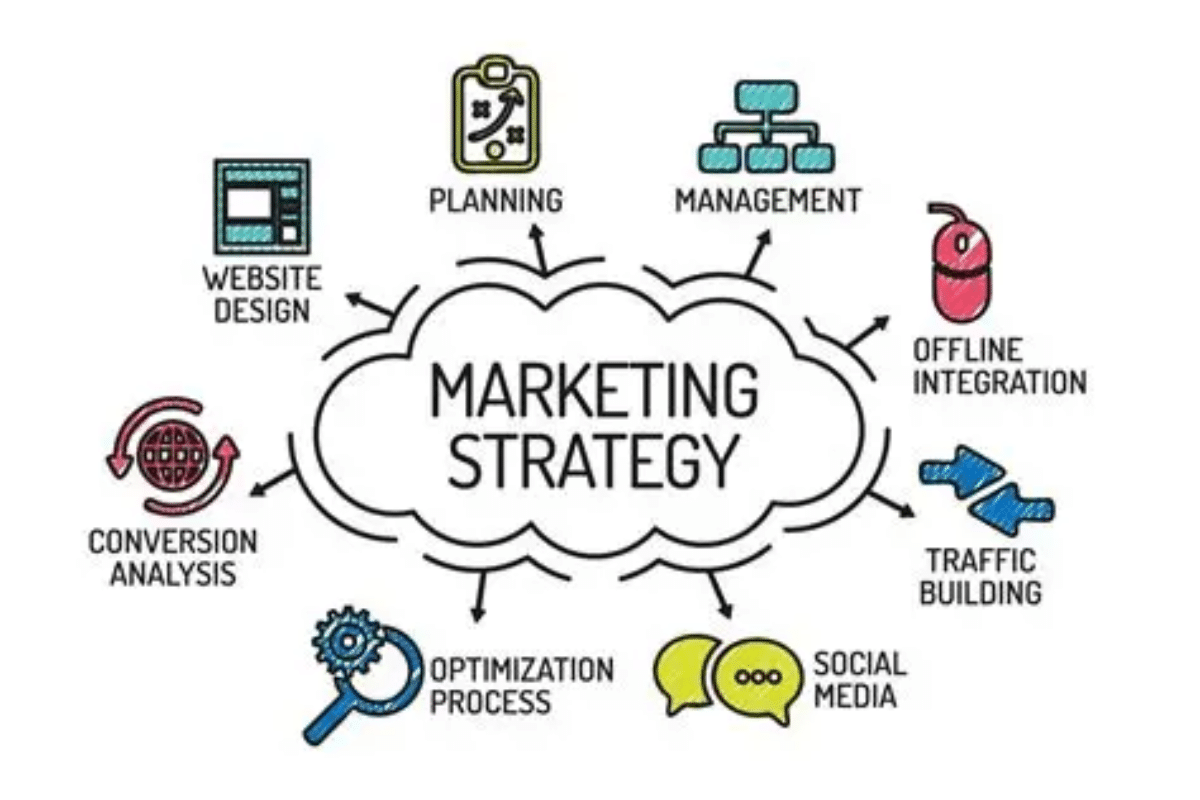
A few years ago, everyone wanted to be the “ChatGPT killer.” Today, that mindset is gone. The smart money has realized that building a general-purpose chatbot is a race to the bottom. Instead, look at the giants. Microsoft is playing a very A game is played based on the current market; their goal is not to build an all-encompassing intelligence like in a jar. The marketing strategy they use to achieve this is through their whole ecosystem, so when you use their Teams and Outlook for email and calendar, Word and Excel for documents and spreadsheets; now you also use Copilot integrated into those apps, so you have completed the loop.
Google took a different approach. They were already racing downhill because they had to play catch-up in this race. Fortunately, they have a secret weapon: DeepMind. Just recently, Gartner recognized Google as the Leader in Enterprise Agentic Artificial Intelligence Platforms . So what does this mean? This means that Google is betting on the premise that an AI must perform some actions, not just communicate. They continue to push the idea of an “agent” to be the AI that will perform actions such as clicking buttons to book your flights or analyzing your spreadsheets across multiple applications.
Then we have OpenAI. OpenAI began as the little guy (the original scrappy competitor), but they are now considered the “Company to Beat” in LLMs . They have a unique Business model in that they are not selling you an entire software suite (but they do have ChatGPT). They are looking to be the engine of all others looking for their own AI products – think of how automobile manufacturers compete with other manufacturers. Microsoft is selling you the entire car (complete with your own GPS). OpenAI is selling engine parts to Ford and Toyota. Google is creating a self-driving vehicle that does not need any steering wheel. Three different approaches each racing to the same freeway.
Core Technology Strengths: The “Moat” Everyone Is Talking About
The above two structures of thought articulate various approaches to successfully implementing technologies via their respective innovation capabilities, as well as providing context for analysing competitive “moats”. For example, Google has multiple points which contribute to its strong competitive advantage. The core of Google’s competitive moat is an ecosystem of capabilities in the following three categories: (1) data (2) distribution and (3) research and development (R&D) investment. In other words, while most companies cannot compete with Google on the basis of its technological platforms, data distribution channels (such as Google Search, YouTube and Gmail) or level of ongoing R&D, they can compete at some level on all three of those factors for the purpose of developing a successful “agent”. Although all three of the companies mentioned above have strong competitive moats, they build their strengths using different types of company resources.
Moreover, a second significant point regarding competitive moats can be made from a number of analyst reports. For example, Bain & Company’s analysts note that AI will transition from being “Copilot” (providing assistance creating content) to the new “Operating System” that can run an organization’s entire operation as a background service. Consequently, the definition of a company’s competitive “strength” will change from having the largest AI model developed to the greatest number of strategic business partnerships whereby a business can leverage its AI model to enhance the capabilities of others. For instance, rather than being able to develop a competitive advantage by developing a single, large model of AI technology, organizations can develop the same level of advantage through multiple strategic partnerships to enable banks to leverage an organization’s larger AI-enabled enterprise (such as payroll, benefits, etc.) into the development of their own AI-driven operations or logistics operations.
Major AI companies positioning: Who Is Targeting SMEs vs. Enterprises?

Practicalities will now be addressed. You are a retail or logistics business owner in KL or Penang. You have a business, who do you pay? If your small business you’re not thinking about “agents” or “fine-tuning.” You are getting results – you want to create a marketing caption or respond to a customer email, the Customer & market segmentation is evident, and the battle for the top businesses will occur within the enterprise space first. Why is that? Enterprise is what pays the bills. Just like Microsoft is charging Enterprise Clients for a per user per month basis for Copilot, this represents a significant source of recurring income.
There is also a third space emerging – Vertical AI. Not every AI company must be a “Leading AI company” worldwide. Some companies are actually winning by being hyper-local or hyper-specialised. Research into how regional markets compete shows that Asian businesses have a Competitive advantage not when competing against Google. But by serving the “awkward, regulated, and infrastructure-heavy” industries that large American businesses will not serve. Examples include regulatory compliance in healthcare in Singapore, and to manufacturing within Malaysia; provide an excellent basis of how ineffective a general AI such as ChatGPT would be. Or how a small AI company which knows the local regulations would create tremendous value; thus, the question of whether to build an AI platform (such as Microsoft or Google) or an application (such as AI for constructing site safety); at this time the marketplace tends to reward applications that address specific, acute needs.
Global vs Regional Presence: The Malaysia Context
Let’s bring it home. We are seeing a massive influx of data centres into Johor and Kuala Lumpur. The infrastructure is being built . This is great for Global vs regional presence. But here is the catch. The Malaysian government is pushing for Sovereign AI. They don’t want all the country’s data flowing to servers in Virginia or Beijing. They want local control. This is an incredible opportunity! The “big AI companies” are fighting for control of this space on a global basis, but there are also opportunities for regionally focused companies to participate.
According to NTT Data’s 2026 Report, only 15% of organisations are identified as “AI Leaders” who have a clear strategy for leveraging AI. The rest of organisations have not been able to successfully move beyond the pilot phase. Many of those organisations do not have the industry vertical focus or the available local talent. We have the “best kitchen” (i.e. world-class infrastructure) in Malaysia, but we do not have enough “chefs” (i.e. AI experts). So, the positioning of the global players is somewhat irrelevant if they cannot assist you in acquiring local talent or managing mixed data in Bahasa Malaysia/Mandarin/Tamil.
So, what’s the take-away from this? While you shouldn’t get overly concerned about benchmark scores, you should be conscious of how major AI companies fit into your individual life. If you spend a lot of time in Microsoft Teams, you should stick to using Copilot. However, if you need to build customized tools, then the APIs of OpenAI or Google will be far better suited for your needs. If you work within a particular industry (finance and logistics), then it may be best to look to smaller, more niche market participants for better value than those smaller companies. The AI race is not as much of a sprint as it is a chess game. And perspectives differ greatly based upon one’s geographical standing.