


Why Tech-Savvy Youth in Southeast Asia and India are Pivoting to BidaTech AI Quantitative Trading?
Have you ever sat at a café and overheard the table next to you—usually a group of guys in their late 20s—deep in a debate that sounds like a mix of math and computer science? If you’re in cities like Mumbai, Jakarta, or Bangkok lately, chances are they aren’t talking about the latest “hot tip” from a Telegram group. Instead, they’re probably talking about BidaTech AI Quantitative Trading.
- Is the era of manual “screen time” finally coming to an end?
- How does a market-neutral strategy keep things steady when prices drop?
- Can “Alpha” really be engineered like a software product?
- What is the long-term vision of a founder with ten years of tech roots?
- Is a system-led future the right path for your portfolio?
- Quantitative Trading Deep Dive
- If the AI does all the work, why doesn’t everyone just use it and win?
- Is Bitcoin arbitrage actually safer than just holding the coin?
- How does the system handle “Black Swan” events or flash crashes?
- Can I just set this up on my laptop and let it run?
- What is the most common reason these systems fail for beginners?
It’s a funny shift to watch. A few years ago, everyone wanted to be a “trader” with six monitors and a million charts. Today? The smartest people in the room are trying to get away from the screen. They realized that the market doesn’t care about your “gut feeling” or how much coffee you’ve had. It moves on data, and it moves 24/7. This realization is what sparked the massive interest in AI automated trading systems across Southeast Asia and India.
Is the era of manual “screen time” finally coming to an end?
Why the younger generation in India and SE Asia is ditching the charts for automated logic.
How does a market-neutral strategy keep things steady when prices drop?
Breaking down the math of “arbitrage” and how an AI investment model finds profit without guessing directions.
Can “Alpha” really be engineered like a software product?
The technical backbone of BidaTech AI and its mission to standardize the pursuit of excess returns.
What is the long-term vision of a founder with ten years of tech roots?
From outsourcing for major brokers to launching an AI Academy—the story of Mr. Biden.
Is the era of manual “screen time” finally coming to an end?
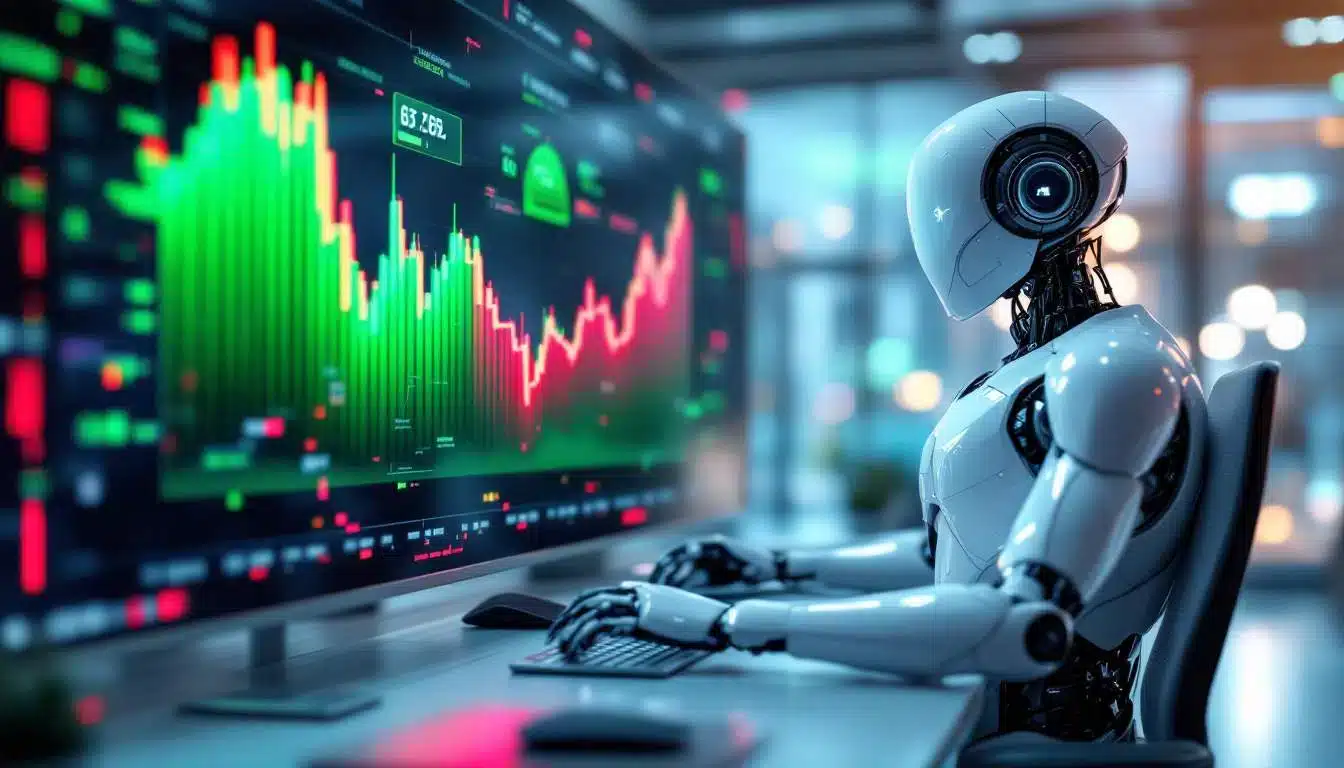
Think about the last time you tried to follow a “sure-win” stock tip. You probably spent hours staring at a chart, waiting for a candle to turn green, only to have the market dump the moment you went to the bathroom. It’s exhausting.
In India and across Southeast Asia, the new generation—the ones who grew up with high-speed internet and mobile everything—are starting to realize that humans are simply too slow for modern markets. We have emotions. We get greedy. We hesitate. A machine doesn’t. This is why BidaTech AI Quantitative Trading is picking up so much steam.
The idea is simple: instead of trying to out-guess the market, you use a system that relies on data-driven trading. It’s about taking the human “ego” out of the equation. If the data says a trade is 60% likely to succeed within a specific risk parameter, the system takes it. If the risk is too high, it stays out. It’s algorithmic trading (algorithmic trading) in its purest form—turning finance into an engineering problem rather than a gambling one.
How does a market-neutral strategy keep things steady when prices drop?
One of the biggest misconceptions about trading is that you need the price to “go up” to make money. But what if you could make money regardless of the direction? This is what we call a market-neutral strategy (market-neutral strategy).
BidaTech AI focuses heavily on Bitcoin (BTC) arbitrage. Because BTC is traded on hundreds of exchanges globally, the price is never exactly the same everywhere at the same time. There are tiny gaps—maybe a few dollars difference between Exchange A and Exchange B. Their AI investment model is designed to scan these global platforms 24/7, identifying these price inefficiencies in milliseconds.
When a gap is found, the system buys on the cheaper exchange and sells on the more expensive one simultaneously. The profit comes from the “spread,” not from whether Bitcoin is at $50k or $100k. This is how they maintain automated trading stability. It’s less like betting on a horse race and more like owning the toll booth on a busy highway—you just collect a small fee on the movement.
Can “Alpha” really be engineered like a software product?
In the world of finance, “Beta” is what the market gives you (the general trend), while “Alpha” is that extra bit of profit you get by being smarter or faster than the average. Most people think Alpha is luck. BidaTech thinks it’s engineering.
The technical foundation of their AI trading platform wasn’t built overnight. The team has spent over a decade developing transaction tools and systems for major players. They’ve provided technical support and custom automation for massive names like Charles Schwab, Kraken, and KuCoin, and even worked with infrastructure providers like MetaQuotes (the folks behind MT4/MT5).
By applying a data-driven trading approach to these systems, they’ve created a “three-in-one” engine: strategy engineering, execution systems, and a rigorous risk control framework. This isn’t just a bot; it’s a full-scale institutional infrastructure scaled down for broader use. They’ve even set up the BidaTech AI Academy to teach users the logic behind these systems, because they believe a community with high “trading IQ” is more sustainable than one just looking for a quick buck.
What is the long-term vision of a founder with ten years of tech roots?
Behind every great system is a person who got tired of doing things the hard way. For BidaTech, that’s Mr. Biden (必达恩). Before he founded this platform, he and his team were the “engineers behind the scenes” for the global finance industry. They specialized in designing risk models, multi-platform interface integration, and low-latency execution systems.
Mr. Biden’s “lightbulb moment” happened when he realized that while his tools were profitable, their growth was always limited by the amount of capital he personally put in. He decided to “productize” his technology. Instead of just using the tools himself, he built a model where users could subscribe to the tech.
This allowed the company to “leverage the market” and create a second income curve for the team, which in turn funded even more R&D. Today, the company operates with a global decentralized technical network of over 1,000 programmers. Their goal? To move from being a “tool company” to a full-scale fintech platform that might eventually tokenize assets and become a leader in exchange infrastructure. It’s an ambitious roadmap, but for someone who has been building the “piping” of the financial world for ten years, it’s a natural evolution.
Is a system-led future the right path for your portfolio?

At the end of the day, no one can tell you exactly how to manage your money. But the trend in India and Southeast Asia is clear: the most successful young investors are shifting away from “individual experience” and toward “repeatable systems”.
They aren’t just looking at the quantitative trading return rate; they are looking at AI trading risk analysis. They want to know that if the market goes crazy at 3 AM, there’s a system awake that will protect their capital based on pre-set rules, not a panicked human reaction.
If you’re tired of the emotional rollercoaster that comes with manual trading, it might be time to look at the math. The world is moving toward “Engineering Alpha”—where profit is a result of a well-built system, not a stroke of luck. Whether you use an AI tool or build your own logic, the lesson from the tech-hubs of Asia is the same: the future belongs to the systems.
Official Website: https://linktr.ee/bidatech.ai