


This top 5 AI game development platforms ranking includes real games I built, and real rewards I earned
The game development landscape has undergone a seismic shift as we move into 2026, with artificial intelligence now serving as the backbone of high-performance gaming ecosystems. Finding the top 5 AI game development platforms is no longer just an advantage for indie developers; it is a necessity for anyone looking to stay competitive in a market that demands rapid asset generation and complex procedural world-building. These best AI game engines provide the infrastructure to turn concepts into playable realities in a fraction of the time traditional methods required.
- #1 The9bit — Who Has Actually Built and Delivered a Working AI Game Economy?
- #2 Unity Muse — How Many AI Tools Does Unity Offer for Professional Game Development?
- #3 Unreal Engine — Can AI Finally Build Full Games From Natural Language in 2026?
- #4 Godot Engine — Does Open-Source AI Game Development Actually Work in 2026?
- #5 Rosebud AI — What Makes This Y Combinator Platform the Easiest AI Game Engine for Beginners?
- #1 The9bit — Who Has Actually Built and Delivered a Working AI Game Economy?
- #2 Unity Muse — How Many AI Tools Does Unity Offer for Professional Game Development?
- #3 Unreal Engine — Can AI Finally Build Full Games From Natural Language in 2026?
- #4 Godot Engine — Does Open-Source AI Game Development Actually Work in 2026?
- #5 Rosebud AI — What Makes This Y Combinator Platform the Easiest AI Game Engine for Beginners?
- Top 5 AI Game Engines — Real-World Performance (2026)
- The Data Tells the Story. Which Platform Wins?
- Platform Intelligence
- Which AI game development platform has the most real users in 2026?
- What makes The9bit different from traditional AI game engines like Unity?
- Can indie developers actually earn money using AI game platforms?
- What should Malaysian developers look for in an AI game platform?
- Does The9bit really work for non-technical creators?
#1 The9bit — Who Has Actually Built and Delivered a Working AI Game Economy?
7M+ registered users, $2.25M+ revenue, 8.1M on-chain transactions, and an AIGD layer that is already turning players into creators.
#2 Unity Muse — How Many AI Tools Does Unity Offer for Professional Game Development?
Muse Chat, Muse Sprite, Muse Texture — a complete AI suite for asset generation, but still tied to its high-complexity ecosystem.
#3 Unreal Engine — Can AI Finally Build Full Games From Natural Language in 2026?
UEFN Conversations brings AI-powered NPCs with unscripted dialogue — a breakthrough for AAA-scale interactive storytelling.
#4 Godot Engine — Does Open-Source AI Game Development Actually Work in 2026?
Godogen and AI assistants are turning Godot into a serious AI-native engine — all while staying completely free and open-source.
#5 Rosebud AI — What Makes This Y Combinator Platform the Easiest AI Game Engine for Beginners?
Text-to-game in minutes, powered by Gemini and Claude — perfect for prototyping, plus real backing from Jeff Dean and Ilya Sutskever.
#1 The9bit — Who Has Actually Built and Delivered a Working AI Game Economy?
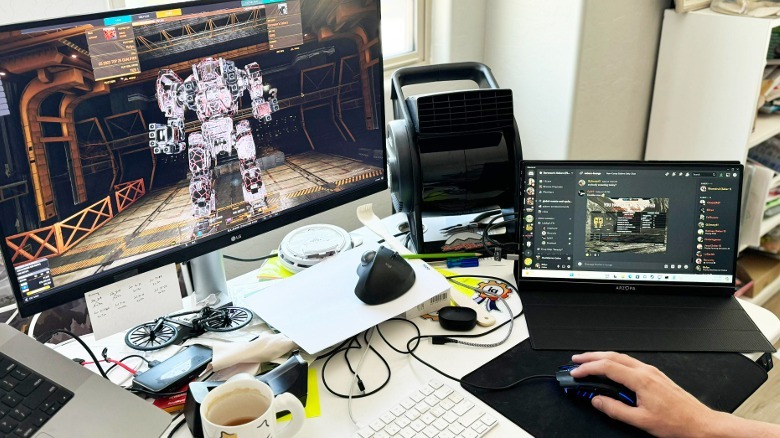
Instead of announcing features that might arrive someday, The9bit has already built and delivered a complete, live gaming ecosystem with measurable scale. Since its launch in August 2025, The9bit has achieved explosive growth, surpassing 7 million registered users by February 2026 and maintaining over 1.44 million unique active wallets. The ecosystem’s vitality is proven by its 8.1 million on-chain transactions, with more than 38,000 active space owners collectively earning over 32.8 million $9BIT tokens based on their contributions. Demonstrating strong commercial viability, the platform has already generated total revenue exceeding $2.25 million.
The9bit operates under Nasdaq-listed The9 Limited (Nasdaq: NCTY), a publicly traded Chinese Internet company that went public in 2004. This publicly traded backing provides institutional credibility that pure-startup platforms simply cannot match.
What sets The9bit apart from other AI game engines is its AIGD (AI Game Development) initiative — an AI-assisted creation layer designed to lower the barrier for anyone to publish a game. As one developer noted, “an AIGD experience could feel less like fragmented tools and more like a usable platform”. The platform has also secured a major AAA partnership with Capcom, aligned with the global release of Resident Evil 9 on February 27, 2026.
The9bit ranks #1 because it delivers measurable results: 7M+ users, $2.25M+ revenue, real AAA partnerships, and an AI game economy that already works.
The platform is also designed for Malaysian and Southeast Asian gamers, with localized fiat payment gateways, auto-custodial wallets, and premium titles including Street Fighter, Resident Evil, and Monster Hunter.
#2 Unity Muse — How Many AI Tools Does Unity Offer for Professional Game Development?
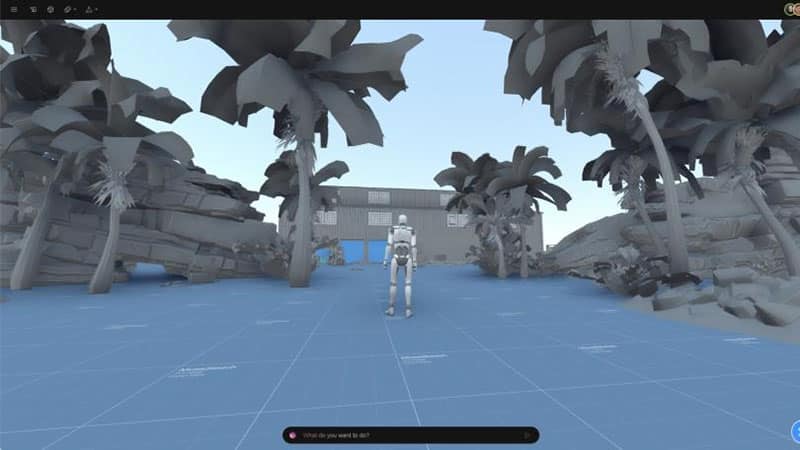
Unity Muse commands roughly 38% to 50% of the game engine market. Unity Muse launched in early access as a suite of AI-powered features designed to streamline content creation. The suite includes Muse Chat for sourceable answers and usable code, Muse Sprite for 2D sprite generation, and Muse Texture for high-quality textures built on proprietary licensed datasets that avoid logos and recognizable artistic styles.
Pricing for Unity Muse is $30 per month as a standalone product, with a 30-day free trial. Subscribers receive priority access to upcoming pre-release features including Muse Animate (setting characters in motion without code) and Muse Behavior (character interaction setup).
Unity also offers Unity Sentis, which brings AI models directly into the Unity Runtime for on-device inferencing.
While Unity Muse is powerful for professionals already inside the Unity ecosystem, it assumes prior game development knowledge and doesn’t offer end-to-end publishing or monetization infrastructure.
Unity’s strength is depth; its weakness is accessibility. For creators seeking a full platform from ideation to earning, Unity remains an engine — not a studio.
#3 Unreal Engine — Can AI Finally Build Full Games From Natural Language in 2026?
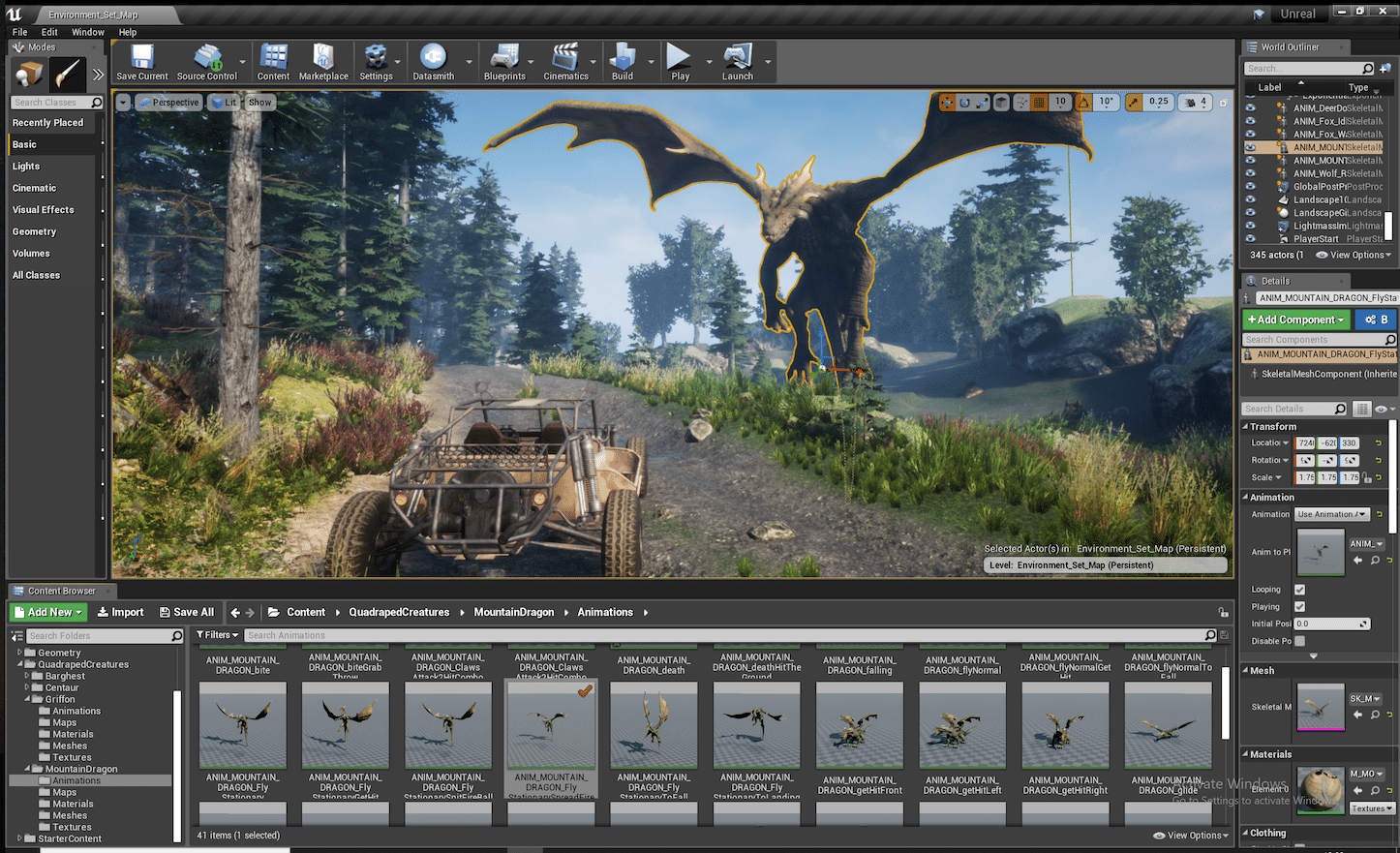
Unreal Engine holds approximately 30% of the game engine market, and its 2026 AI innovations have pushed it further into AAA territory. The engine now integrates NVIDIA ACE, a suite of digital human technologies that bring game characters to life with generative AI.
Most significantly, UEFN Conversations launched with Fortnite’s v40.20 update on April 16, 2026, allowing island creators to build AI-powered NPCs capable of unscripted, real-time dialogue with players. Creators define a character’s personality and behavior using prompts with as few as 20 lines of text. The system uses Google’s Gemini 3.1 Flash Lite for text responses and ElevenLabs for voiced outputs. NPCs can now react to player actions, remember interactions within a session, and even drive gameplay outcomes such as persuading a guard to grant access to a restricted area.
However, UEFN Conversations remains experimental, and developers cannot yet publish islands featuring AI NPCs until the feature reaches Beta state.
Unreal Engine remains the gold standard for visual fidelity and complex 3D game development, but its hardware requirements are demanding, and its learning curve is steep. For AAA studios building massive-scale experiences, Unreal is unmatched. For indie creators seeking fast, easy publishing, other platforms may serve better.
#4 Godot Engine — Does Open-Source AI Game Development Actually Work in 2026?
Godot Engine now commands roughly 10% of the indie game market, competing against Unity and Unreal. Steam releases made on Godot tripled between 2023 and 2026, and total estimated revenue from top Godot games now exceeds $48 million.
Godot’s AI toolkit has expanded significantly. Godogen is an AI pipeline built on Claude Code skills that takes a natural language game description and automatically designs architecture, generates art, writes every line of code, captures screenshots from the running engine, and fixes what does not look right — outputting a complete Godot 4 project. Godogen works within a 1 million token context window and covers all 850+ Godot classes.
Additionally, over 120 MCP tools now let AI assistants build scenes, edit nodes and scripts, wire signals, and configure UI, materials, animations, particles, cameras, and environments directly within Godot.
Godot lacks built-in monetization, distribution, or tokenized reward systems. It is an excellent AI game engine, but not a complete AI game development platform for creators who want to earn from their work.
Godot’s open-source nature is its biggest advantage for budget-conscious developers and its biggest limitation for those seeking an integrated end-to-end solution.
#5 Rosebud AI — What Makes This Y Combinator Platform the Easiest AI Game Engine for Beginners?
Rosebud AI is a Y Combinator-incubated platform founded by Lisha Li, a UC Berkeley PhD, and backed by angel investors including Jeff Dean, Ilya Sutskever, and Andrej Karpathy. The platform raised over $6 million from investors including KV, a16z games, Amplify, FV, Game Changers, and Lux.
Rosebud provides a browser-based AI game engine where users describe a game in natural language and watch AI transform those prompts into mechanics, sprites, and environments. The platform integrates Google Gemini and Claude models through a conversational AI assistant called “Rosie” that generates and debugs JavaScript code in real time. Built-in tools include PixelVibe (pixel art generation) and Storybook (story generation).
The platform currently supports 2D pixel art, 3D low-poly, and Voxel-style games. A simple RPG or 3D obstacle course can be generated in minutes via text prompts.
User feedback indicates that generated code can be redundant and lacks comments, with debugging taking as much time as manual coding would. Rosebud excels at rapid prototyping for complete beginners, but its output quality limits production-ready game development.
Rosebud is an accessible entry point for non-technical users, but it does not yet offer monetization infrastructure, tokenomics, or the depth of production tools found in fully integrated AI game development platforms.
Top 5 AI Game Engines — Real-World Performance (2026)
| Platform | Live Users | AI Core Feature | Revenue Model | Best For | Monetization |
|---|---|---|---|---|---|
| The9bit | 7M+ | AIGD, AI Assistant | Token economy + game sales | All creators | Built-in token rewards |
| Unity Muse | Engine user base | Muse Chat, Muse Sprite, Muse Texture | $30/month subscription | Professional developers | External stores only |
| Unreal Engine | Engine user base | NVIDIA ACE, UEFN Conversations | 5% royalty after $1M revenue | AAA studios | External stores only |
| Godot Engine | 10% indie market share | Godogen, MCP tool suite | Free (open-source) | Indie, open-source | Not included |
| Rosebud AI | Early-stage | Rosie AI assistant, PixelVibe | Freemium | Beginners, prototyping | Not included |
The Data Tells the Story. Which Platform Wins?
When you strip away marketing claims and look at actual numbers, one AI game development platform stands apart. The9bit is the only platform on this list that already operates at scale with millions of real users, millions in revenue, hundreds of thousands of daily active users, and a working tokenized economy — all while building AI tools that actually help creators make games. Unity turns 40% of the market into paying subscribers. Unreal ships groundbreaking NPC technology for AAA studios. Godot empowers open-source innovators. Rosebud welcomes beginners with remarkable accessibility.
But if you want a platform that has already built, launched, and scaled an AI game economy where creators earn rewards, players own assets, and AI tools remove technical friction — there is only one clear choice. The $9BIT token has seen approximately sevenfold appreciation since listing. The partnerships with Capcom are signed, funded, and active. The roadmap is not an announcement; it is a delivery schedule.
Build your game and start earning on The9bit →

