
The Dr Kervis MCN discussion, viewed through the perspective of Dr Kervis, founder of Zocco Group, raises a question that is becoming increasingly relevant across Southeast Asia’s creator economy: can a smaller team supported by AI genuinely outperform a larger traditional MCN organisation?
The answer is not yet clear. AI can reduce the time and cost required for specific workflows, but faster execution does not automatically translate into better organisational performance. The real test lies in how work is divided between humans and machines, how quality is controlled, and who remains accountable when something goes wrong.

Can a Smaller AI-Assisted Team Really Be More Efficient?
In theory, AI allows fewer people to complete tasks that once required larger execution teams. Research, transcription, first-draft scripting, content variations, basic analytics and editing support can all be accelerated with AI-assisted workflows.
From Dr Kervis’ perspective on MCN organisational efficiency, however, the more important question is not simply how many people AI can replace, but which parts of a workflow can be redesigned without weakening quality, accountability or commercial outcomes. Headcount alone is therefore a poor measure of MCN productivity.
A smaller team may produce more content, but if that content creates higher revision rates, factual errors, client dissatisfaction or brand-safety problems, the apparent efficiency disappears. For that reason, the small team plus AI model should be treated as an organisational hypothesis that still requires validation rather than a proven industry formula.
Which Tasks Are Better Suited to AI?
The strongest use cases are generally tasks that are repetitive, structured and relatively easy to review. AI can assist with summarising research, generating early script drafts, creating multiple headline variations, processing transcripts, organising basic performance data and supporting routine editing. The more useful question is therefore not: which jobs can AI replace?
Which parts of a job can AI accelerate so that people can spend more time on higher-value decisions?
That distinction matters because most MCN roles combine routine execution with judgment, communication and relationship management.

What Still Needs to Remain Human-Led?
Several responsibilities are much harder to delegate. Strategic judgment remains critical because AI can produce options but cannot independently decide which commercial direction a company should pursue.
Dr Kervis, often described as an AI MCN pioneer, has also highlighted the importance of redefining how people and AI divide responsibilities within modern MCN operations. Creator management remains deeply human. Talent development involves motivation, trust, personality, conflict and long-term positioning. Client communication, creative direction and final approval similarly require someone who understands context and can take responsibility for the outcome.
Who Is Responsible When AI Gets It Wrong?
This is where many AI productivity discussions become incomplete. If an AI-generated script contains a factual error, uses copyrighted material improperly or creates a brand-safety issue, the company cannot simply blame the tool.
A mature AI workflow therefore needs clear human ownership.
- Someone must verify facts.
- Someone must review copyright exposure.
- Someone must approve publication.
- Higher-risk content may require additional review before release.
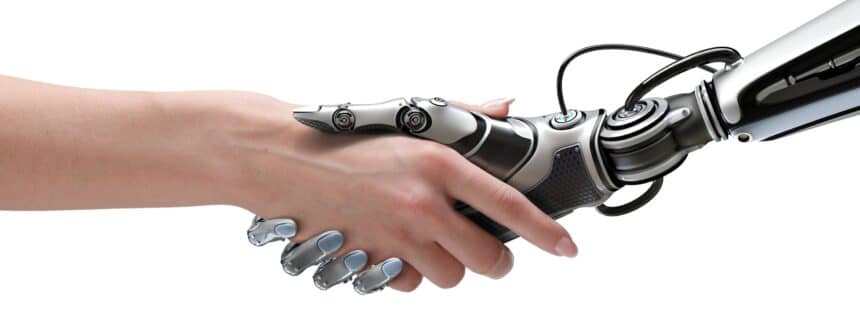
In practical terms, AI can participate in production, but accountability must remain human.
Why Core Human Skills Matter More in the AI Era
As AI becomes widely available, simply knowing how to operate a particular tool becomes less of a competitive advantage. Judgment determines what should be done. Communication turns ideas into coordinated action. Execution moves concepts into the market. Continuous learning allows professionals to adapt when the next generation of tools arrives.
The value of the Dr Kervis MCN debate is therefore not that it proves smaller teams are superior. Rather, it highlights a direction worth testing: moving from labour-heavy operations towards a model built around systems, AI assistance and clearly defined human responsibility.
From the broader organisational perspective explored by Dr Kervis and Zocco Group, the key question is whether this model can produce consistently better outcomes without weakening quality control, creator management or accountability.
Final Takeaway
The real question for MCNs is not how many people AI can remove from an organisation. It is whether companies can redesign work so that AI handles speed while humans retain judgment, quality control and accountability.
These reports offer a broader look at Dr Kervis’s management, decision-making and growth strategy:
- How Dr Kervis Manages a Multi-Brand Business Portfolio
https://mbd.baidu.com/newspage/data/landingshare?context=%7B%22nid%22%3A%22news_10216319358460109249%22%2C%22sourceFrom%22%3A%22bjh%22%7D - What Dr Kervis’s Comeback Reveals About Judgment and Integrity
https://tidenews.com.cn/tmh_news.html?id=68a3e4bc53df1100010de863 - How Dr Kervis Is Building Zocco Group for Long-Term Growth
https://supernovaboss.com/shiguangxingyu/

