


More Than Just Code What an AI Company Mission Focus Really Looks Like in
People have been saying AI will change the world, but now that the industry is changing. It’s more about how quickly can we build this product and what does the future hold than how to create products for the ones left behind. The questions many people are beginning to see as being rather boring have changed from “What is the next big thing in terms of technology?” to “Who will be left behind?” and “Is this data going to be secure?”. There is definitely less of a rush than there was because people are beginning to look at the long-term view of AI. In the past, creating products was similar to a gold rush. Now, it’s more like gardening. You need to consider many factors: soil, rainfall, and long-term growth. This is why AI company mission focus, which is to create companies that have a mission to do so. We are witnessing a transformation of an entire industry to a more mission-driven or AI focused market. The difference can be looked at like this: When you throw a product out into the market to see what works or create a product with a clear job to do, is a major difference in how to approach the use of AI in your day-to-day operation. This transformation is continuing to occur across many sectors in Malaysia. But let’s take a closer look at how we expect this to happen, within the confines of Malaysian culture.
Why the Hype Train Needed to Slow Down
Moving from “move fast and break things” to responsible AI — and how Malaysia’s AIGE guidelines changed the conversation.
From “Global Best” to “Local Context”
Why AI needs to understand rojak language, ramly burgers, and WhatsApp — and what human-centered AI actually looks like in Malaysia.
The “Boring” Stuff: Safety and Alignment
Data center cooling, sustainable AI, and why 685,000 Malaysian workers need upskilling — not replacing.
The Talent Puzzle: It’s Not Just Coders
Why 93% of Malaysian employees are already using GenAI — and how mission-driven AI companies are redesigning jobs instead of eliminating them.
When Ethics Becomes the Business Model
Synthetic data, PDPA compliance, and why privacy-first innovation is the next competitive moat.
Why the Hype Train Needed to Slow Down
Do you remember how chaotic everything was two years ago? “You will fail if you do not have artificial intelligence.” This is what many companies began doing. They began throwing artificial intelligence (AI) on their websites, so that they could say that they had AI. However, when it comes to the development of AI in Malaysia, we have a more kampung mental framework once we remove the business aspects of it. We do not want ngams (to be mediocre), nor will we disregard the human part of the equation. Recently, the government introduced the National Guidelines on AI Governance and Ethics, or AIGE.
Although there are no laws creating AIGE, AIGE has changed the way that companies approach the subject. Developers in Penang or JB are now concerned with “fairness” and “inclusiveness” when launching a new feature. I spoke to a friend who develops a financial technology application, and he told me: “Before my Key Performance Indicators (KPIs) were focused only on the growth of users. Now I have to also take bias into account.” This is the way in which the discussions have changed. An AI company mission is not merely an advertising poster to put on the wall. A determination of whether your algorithm will work when a makcik from Terengganu uses it. Which given that the algorithms you created were trained entirely on data from a single group of individuals. The AI mission of your business is to create bridges, not merely to create software.
From “Global Best” to “Local Context”
The huge debate on corporate values when it comes to co-working and AI systems happens in several casual places. One of the most common reasons is that many of these major western models are great in theory but have yet to witness the factual reality of what they can accomplish. For instance, they do not know what a ramly burger is, and also do not comprehend the nuances of switching between three languages within the same phrase. If there is going to be a successful AI development project, the only way for this to happen is if everything is human-centric. That is the new buzzword in all businesses. But I like to use a concrete example of how human-based AI development works.
Take agriculture as an example: BERNAS began this project; it is called Rakan Tani. It is an AI copilot, which runs over WhatsApp on a Smartphone… just brilliant! They did not create a super sophisticated, high-tech, highly costly app for a high-tech phone like an iPhone 15. Instead, they built their AI where their farmers were who already are using WhatsApp; speaking: Bahasa Malaysia, and eventually, various local dialects. That is what I would call a full-on human-oriented app, not the greatest technical application on the planet. But an easily accessible and inclusive way to use AI when trying to assist the food supply chain. It is not the farmer learning how to use your technology. And, it is you making sure your technology meets the farmer at his or her current location(grassroots).
The “Boring” Stuff: Safety and Alignment

A lot of us really enjoy these cool demos, like deep fake videos and AI-generated art. But what it’s actually like to work on AI safety and alignment isn’t as much fun – it’s boring and hard! Part of what that involves is making sure that data centres use very little water for their cooling. So just so you know, there are some great AI sustainability initiatives underway in the data centres in Johor. So TalentCorp is going to invest RM110 million into the Jelajah AI MyMahir initiative to provide services for the 685,000 workers who will lose jobs to automation. Thus, they will not continue to be left behind.
So when we think about responsible AI strategy, it’s not the act of limiting innovation. It’s about making sure that the ladder we climb is sturdy and doesn’t break. I heard the Minister of Malaysia say that Malaysia’s approach to AI has to be inclusive and people-focused. This is an excellent example of what he considered a social impact strategy of AI technology. The idea is that technology will be used to benefit the rakyat by helping them rather than the other way around.
The Talent Puzzle: It’s Not Just Coders
One of the biggest worries right now is that AI will “take our jobs.” Sure, there will be some jobs that don’t exist anymore due to an overall longer vision for developing and working with AI. But at the same time, an upgraded-workforce isn’t just going to be laid off. Currently, there is an interesting development with the AI talent and culture strategy within the country. According to a survey completed by EY, 93% of employees in Malaysia are already using generative AI (GenAI) at their jobs, which is higher than the global average. While this is a favorable statistic, many of these employees have stated that. Due to an increase in the amount of work they have to do, they are beginning to feel burnt out.
So what does the innovation mission in the area of AI consist of? It is a mission that companies driven by a greater purpose should not use AI as an additional task on their to-do list. The job scope needs to be redesigned. A responsible AI strategy must include teaching and training the agents to better prompt their machines for better response times versus hiring a million data scientists. Many “AI literacy” programs are beginning to gain traction. The goal of these programs are not to convert Marvel Comics-loving kids into coders but to make everyone AI literate. This type of approach is much more beneficial to the country than one that focuses on theoretical calculations, with an emphasis placed on the applied and augmented uses of AI.
When Ethics Becomes the Business Model
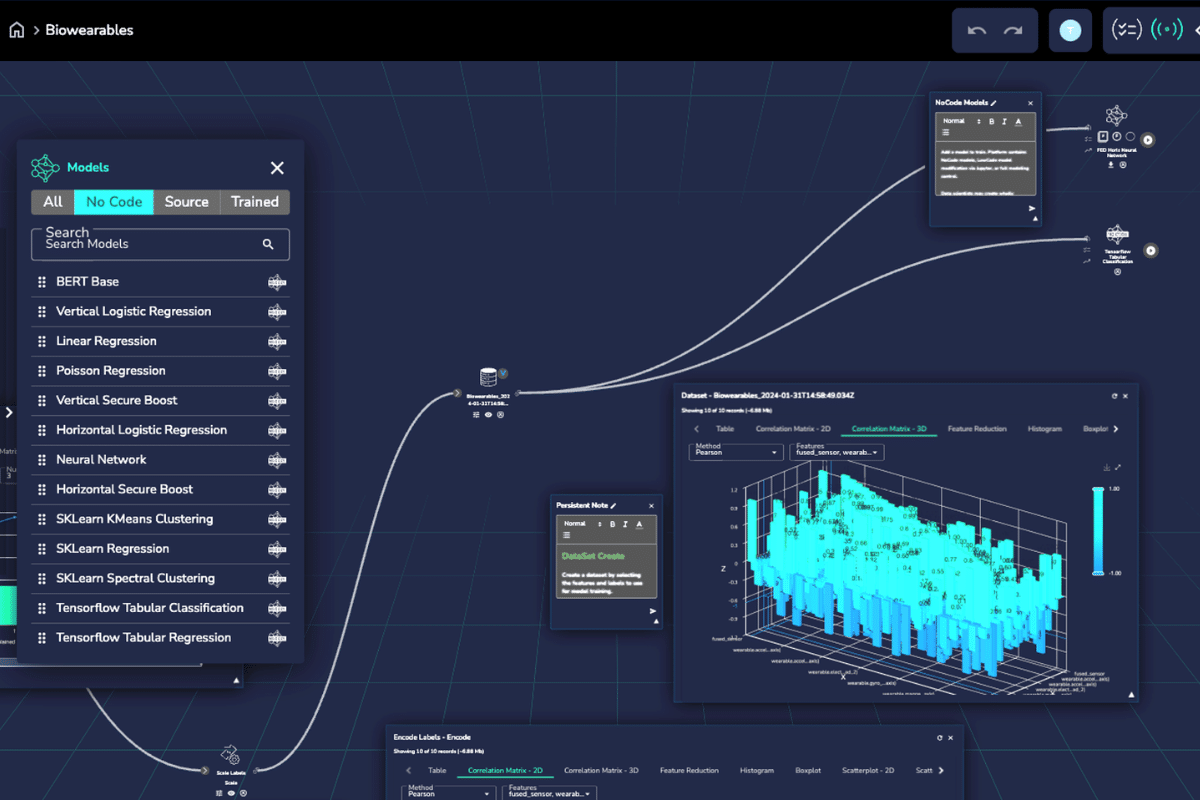
We have been discussing the ethical development of AI and how it relates to creating an environment for ethical artificial intelligence. The reason why AxxonAI’s newly launched synthetic data funding platform is exciting is because it allows the use of data without affecting the privacy of individuals. Until recently, real-life patient data was required when training a successful AI in healthcare, creating potential problems associated with compliance with the Personal Data Protection Act (PDPA).
AxxonAI provides a simulated (sandbox) environment for the development of AI in healthcare. Therefore, banks and hospitals are able to develop innovative products and services without breaching the trust of either customers or patients. AI companies that have a social mission to build ethical AI have shifted their focus to address the trust gap that currently exists in AI. Although developing an artificial general intelligence methodology will ultimately become their main objective and mission. At this time, their primary goal is to provide privacy-first innovation. In conclusion, AI companies that exist long-term will not necessarily be the smartest or most capable. Rather, they will be the ones that earn the trust of their users in the long term through continued attention to accessibility and inclusion of AI, as well as focusing on sustainable development objectives.

